It has been a big week for Artificial Intelligence and it is still only Tuesday.
Morgan Stanley released some of the results it has achieved from developing its own model. Here is a section from a Wall Street Journal article today:
In January, the company rolled out a tool known as DevGen.AI, built in-house on OpenAI's GPT models. It can translate legacy code from languages like Cobol into plain English specs that developers can then use to rewrite it.
So far this year it's reviewed nine million lines of code, saving developers 280,000 hours, said Mike Pizzi, Morgan Stanley's global head of technology and operations.
This is an excellent example of how AI can boost productivity. Modernising code is a massively expensive undertaking. It is often cheaper to start from scratch than to mess with code that is antiquated but works.
Considering one of the biggest roadblocks to government efficiency is the difficulty of migrating legacy codes, this kind of innovation is truly in the interest of the public good.
Today Meta Platforms signed a deal with Constellation Energy to fund the continued operation of a nuclear reactor at the Clinton plant in Illinois.
It may also help pay for the construction of a new reactor at the same site since there is already permission to expand at the location.
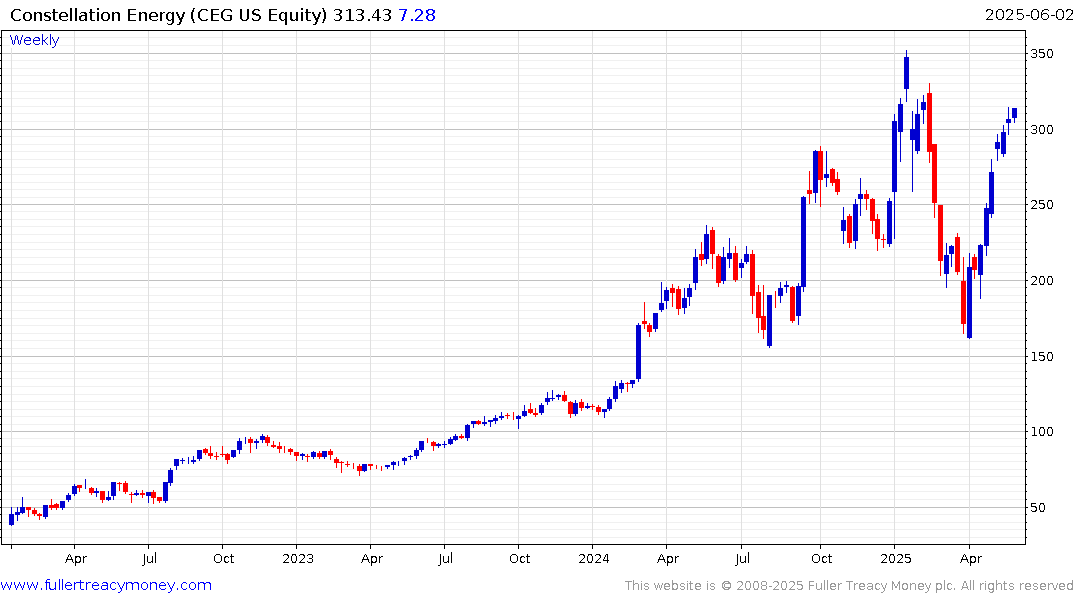
The company achieved a better price from Constellation by committing to such a large draw; $80 versus the $110 per megawatt that Microsoft paid a year ago.
These stories highlight the primary drivers of the AI boom.
AI is delivering real world productivity enhancements and requires a leap in the capacity of the electrical grid to function.